

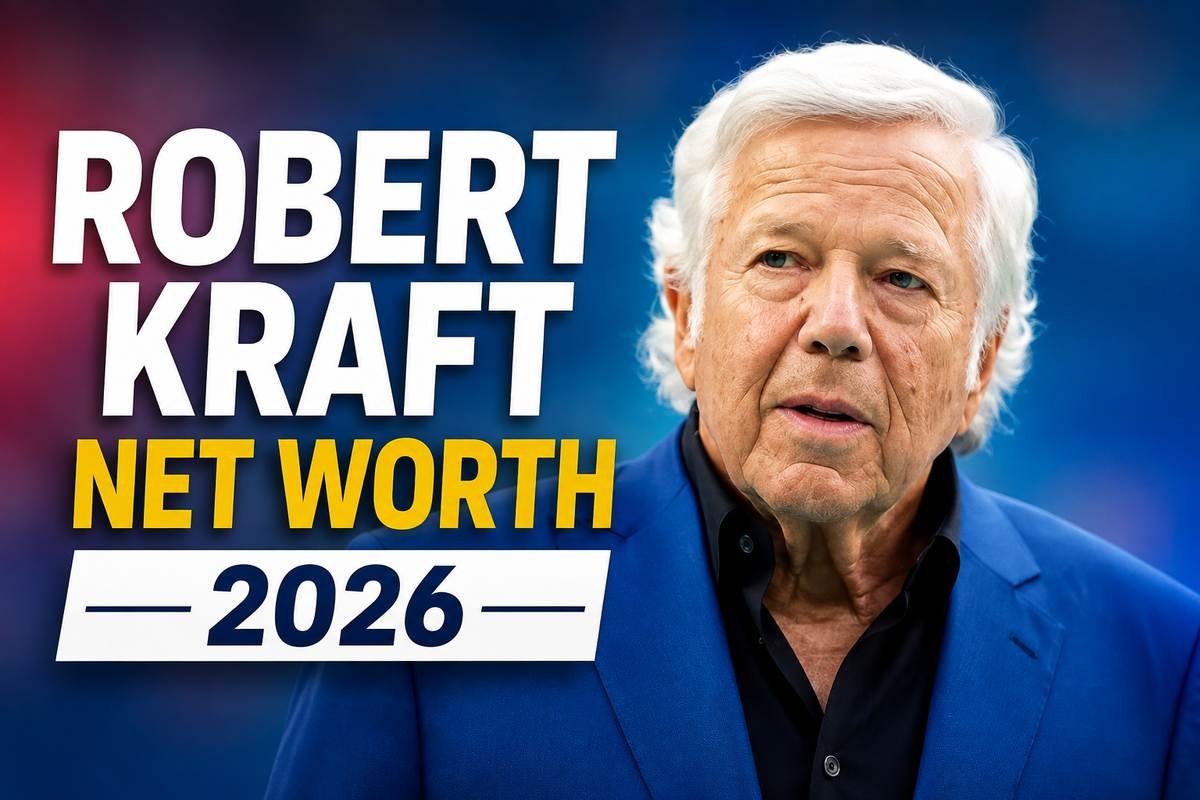
Robert Kraft net worth is estimated at $13.8 billion as of August 2026, according to Forbes’ real-time estimate. The longtime owner of the New England Patriots built his fortune through the paper and packaging industry before expanding into professional sports, real estate, entertainment, and private investments.
Unlike some sports owners whose fortunes were primarily inherited or created through a single franchise, Kraft’s wealth has several documented business foundations. His ownership of the Patriots is now a major part of his financial profile, but his business career began decades before he purchased the team.
Robert Kraft’s net worth is estimated at $13.8 billion as of August 2026, according to Forbes.
Quick Facts :
| Quick Fact | Details |
|---|---|
| Full Name | Robert Kenneth Kraft |
| Date of Birth | June 5, 1941 |
| Age | 85 years |
| Birthplace | Brookline, Massachusetts, U.S. |
| Nationality | American |
| Profession | Businessman, Sports Team Owner |
| Known For | Owner of the New England Patriots |
| Estimated Net Worth (2026) | $13.8 billion |
| Primary Sources of Wealth | Manufacturing, Sports, Investments & Real Estate |
| Spouse | Dana Blumberg |
Robert Kraft Net Worth
Estimated net worth: $13.8 billion
Forbes listed Robert Kraft’s real-time net worth at $13.8 billion on August 17, 2026, placing him among the world’s wealthiest sports team owners. Forbes also reported a $13.8 billion figure in its 2026 ranking of the world’s richest sports team owners.
That number should be treated as an estimate rather than a publicly audited personal balance sheet. Kraft is involved in privately held businesses, and the market value of private companies, sports franchises, real estate, investments, debt and other assets can change over time.
One of the clearest examples of how Kraft’s wealth has grown is the New England Patriots. He bought the franchise for $172 million in 1994. Forbes valued the Patriots at approximately $9 billion in August 2025.
The dramatic increase in the team’s value is important, but it does not mean the entire $9 billion valuation represents Robert Kraft’s personal cash or personal net worth. A franchise valuation is the estimated value of the business itself, while an individual’s net worth reflects the value of assets and ownership interests after accounting for relevant liabilities.
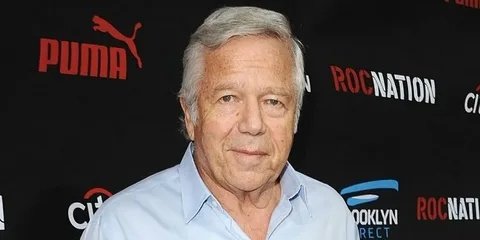
How Robert Kraft Makes Money
Robert Kraft’s wealth comes from several major areas rather than one single income source.
Paper and Packaging
Kraft’s business career began in the paper and packaging industry. The Kraft Group says he launched his career with Rand-Whitney and later founded International Forest Products in 1972. These businesses became part of the foundation for what eventually developed into the broader Kraft Group.
The Kraft Group’s paper and packaging division includes businesses such as Rand-Whitney Container, Rand-Whitney Containerboard, International Forest Products and New-Indy Container Corporation. The group says its combined businesses would rank among the largest paper and packaging operations in the United States.
This part of Kraft’s career is especially important when answering the question “How is Robert Kraft so rich?” His fortune did not begin with football. The packaging and forest-products businesses helped establish his wealth before the Patriots became the centerpiece of his public profile.
New England Patriots
Kraft purchased the New England Patriots in 1994 for $172 million.
The investment became one of the defining business decisions of his career. Forbes’ 2025 valuation placed the Patriots at about $9 billion, making the franchise worth many times what Kraft paid for it.
The Patriots have also become one of the most successful franchises in professional football during Kraft’s ownership. The official team biography states that the franchise won six Super Bowl championships during his tenure.
Must Visit : Another example of a billionaire whose wealth is closely connected to business ownership is Eduardo Saverin’s net worth.
New England Revolution
Kraft also expanded into soccer. In 1995, he became one of three principal investors in Major League Soccer and founded the New England Revolution.
The Revolution forms another important part of the Kraft family’s sports portfolio alongside the Patriots.
Real Estate and Entertainment
The Kraft Group has interests in construction and real estate development in addition to sports and manufacturing.
One of the most visible projects connected to Kraft’s sports business is Gillette Stadium, which opened in 2002. The Kraft Group’s development team oversaw its construction, while the surrounding Patriot Place development later turned the area into a larger sports, retail and entertainment destination.
Private Equity and Venture Investing
Kraft’s business portfolio also includes private-equity and venture investments. The Patriots’ official biography describes the Kraft Group as having a portfolio of more than 100 venture and private-equity investments.
Because many of these investments are private, their individual values and returns are not necessarily publicly disclosed. That is another reason why a precise personal net-worth calculation is difficult to reproduce independently.
Robert Kraft’s Early Life and Education
Robert Kenneth Kraft was born in Brookline, Massachusetts, and grew up as a lifelong sports fan, particularly of the Patriots.
He attended Columbia University on an academic scholarship and graduated in 1963. He later attended Harvard Business School, where he earned an MBA.
Kraft’s interest in the Patriots began long before he owned the team. According to the team’s official biography, he became a season-ticket holder in the 1970s and followed the franchise through several Boston-area venues.
That long connection eventually influenced one of the biggest business decisions of his life.
Robert Kraft’s Career Journey
Early Business Career
After completing his education, Kraft entered the paper and packaging industry. He became involved with Rand-Whitney and subsequently built International Forest Products, founded in 1972.
The business strategy eventually expanded beyond one company into a diversified family holding company.
Building the Kraft Group
The Kraft Group developed around several industries, including paper and packaging, sports and entertainment, real estate development, and investment activities.
This diversification helped Kraft create wealth outside professional sports.
Preparing to Buy the Patriots
Kraft’s path to Patriots ownership actually started years before his 1994 purchase.
In 1985, he purchased an option on land surrounding the old Foxboro Stadium. In 1988, he purchased the stadium itself out of bankruptcy court. According to the Patriots, these moves eventually became important steps toward acquiring the franchise.
In January 1994, Kraft committed more than $172 million in family resources to purchase the Patriots rather than accept a reported $75 million buyout that would have allowed the team to leave New England.
Robert Kraft’s fortune can also be viewed alongside other wealthy entrepreneurs and sports owners featured in our billionaire net worth coverage.
Patriots Ownership
Kraft officially became the Patriots’ owner in January 1994.
The franchise’s performance changed dramatically during his ownership. The Patriots’ official biography says the team won 374 games, including playoffs, during Kraft’s first 32 seasons as owner through 2025, while reaching the playoffs 23 times and winning six Super Bowls.
The business transformation was significant as well. The franchise moved into the privately financed Gillette Stadium in 2002, followed by the development of Patriot Place.
Major Achievements
Robert Kraft’s most significant professional achievements include:
- Buying the New England Patriots in 1994.
- Building a diversified business empire through the Kraft Group.
- Developing major paper and packaging businesses.
- Owning the New England Revolution.
- Overseeing the development of Gillette Stadium and Patriot Place.
- Winning six Super Bowl championships as Patriots owner.
- Helping establish the Patriots as one of the NFL’s most valuable franchises.
- Expanding the Kraft family’s investments across sports, real estate and private investments.
The Patriots’ six championships during Kraft’s ownership are particularly notable because the franchise had won only two playoff games before his ownership era, according to the team’s historical account.
Robert Kraft and the New England Patriots
The Patriots are central to Kraft’s public identity, but they should be viewed as one component of his broader business empire.
Forbes valued the Patriots at approximately $9 billion in 2025, compared with the $172 million Kraft paid for the franchise in 1994.
That comparison illustrates why professional sports ownership can become an extraordinary long-term wealth creator. However, franchise appreciation should not be interpreted as an equivalent amount of personal cash available to the owner.
Kraft’s sports portfolio also includes the New England Revolution, while Gillette Stadium and Patriot Place connect his sports holdings with entertainment and real estate operations.
According to the New England Patriots official biography, Kraft’s business career and ownership history extend well beyond his role as an NFL team owner.
Robert Kraft Net Worth Growth
A reliable year-by-year personal net-worth history is not publicly available for every year of Kraft’s career. Rather than invent historical numbers, his wealth growth is better understood through documented business milestones.
| Period | Major Wealth Development |
| 1960s–1970s | Entry into paper, packaging and forest-products businesses |
| 1980s | Expansion into the Foxboro Stadium and surrounding property |
| 1994 | Purchased the New England Patriots for $172 million |
| 2000s | Expansion of sports, stadium and real-estate operations |
| 2010s | Continued growth of sports and investment portfolio |
| 2020s | Forbes estimates Kraft’s fortune in the multi-billion-dollar range, reaching $13.8 billion in August 2026 |
The exact value of Kraft’s private holdings changes over time, so the timeline is more reliable as a description of wealth-building milestones than as a precise annual balance sheet.
Is Robert Kraft the Owner of Kraft Foods?
No. Robert Kraft is not the owner of Kraft Foods.
The similarity between the surname “Kraft” and the Kraft food brand often causes confusion, but Robert Kraft’s business empire is centered around The Kraft Group, which operates across areas including paper and packaging, sports and entertainment, real estate, and investments.
His fortune did not come from owning the Kraft food company.
Robert Kraft’s Personal Life
Robert Kraft was previously married to Myra Hiatt Kraft, who died in 2011. He married Dana Blumberg, an ophthalmologist, in 2022. Forbes identifies Blumberg as his current wife.
Kraft has children including Jonathan, Daniel and Joshua Kraft. Jonathan Kraft is president of the Kraft Group and has played a major role in the family’s sports and business operations.
His family’s financial interests should not automatically be treated as Robert Kraft’s individual net worth. Public estimates of his personal wealth are separate from any combined family valuation.
Robert Kraft’s Philanthropy
Philanthropy is another major part of Kraft’s public life.
The Patriots state that Robert Kraft and his family have given more than $1 billion over their lifetimes to charitable organizations, nonprofit initiatives and community causes.
The Kraft Group also highlights the family’s support for education, healthcare, youth programs, economic mobility and other community initiatives.
This spending does not form part of his net worth, but it provides important context about how the Kraft family has used its wealth.
Interesting Facts About Robert Kraft
- Kraft was already a Patriots season-ticket holder before he owned the team.
- He purchased the Patriots in 1994 for $172 million.
- The Patriots were valued at about $9 billion by Forbes in 2025.
- His business career began in paper and packaging rather than professional sports.
- He founded International Forest Products in 1972.
- He became involved with Major League Soccer and founded the New England Revolution in 1995.
- The Kraft Group has businesses spanning manufacturing, sports, real estate and investments.
- Forbes estimated his net worth at $13.8 billion in August 2026.
FAQs About Robert Kraft Net Worth
What is Robert Kraft’s net worth in 2026?
Robert Kraft’s estimated net worth is $13.8 billion as of August 2026, according to Forbes’ real-time estimate.
How did Robert Kraft become rich?
Kraft built his initial fortune through the paper and packaging industry before expanding into sports, real estate, entertainment and private investments. His purchase of the New England Patriots in 1994 became a major part of his wealth story.
How much did Robert Kraft pay for the Patriots?
Robert Kraft paid $172 million for the New England Patriots in 1994.
How much are the Patriots worth?
Forbes valued the New England Patriots at approximately $9 billion in 2025.
What is Robert Kraft’s biggest source of wealth?
Forbes identifies Kraft’s source of wealth as manufacturing and sports. His broader portfolio also includes real estate and investments.
Does Robert Kraft own Kraft Foods?
No. Robert Kraft’s businesses are associated with The Kraft Group, not the Kraft food company. The Kraft Group’s documented operations include paper and packaging, sports, real estate and investments.
Who owns the New England Patriots?
Robert Kraft is the owner of the New England Patriots, which he purchased in 1994.
Does Robert Kraft own a soccer team?
Yes. Kraft is the owner of the New England Revolution, an MLS club.
How old is Robert Kraft?
Robert Kraft was 85 years old in 2026. Forbes’ 2026 sports-owner ranking identifies him as 84 in its March publication, before his June birthday.
Who is Robert Kraft’s wife?
Robert Kraft married Dana Blumberg, an ophthalmologist, in 2022. He was previously married to Myra Hiatt Kraft, who died in 2011.
Is Robert Kraft a billionaire?
Yes. Forbes’ August 2026 real-time estimate places his wealth at $13.8 billion, making him a billionaire many times over.
What businesses does Robert Kraft own?
The Kraft Group has interests in paper and packaging, sports and entertainment, real estate development, private equity and venture investing.
Conclusion
Robert Kraft’s $13.8 billion estimated net worth in 2026 reflects decades of business building rather than football ownership alone.
His fortune began in paper and packaging, expanded through the Kraft Group, and later grew alongside his investments in the New England Patriots, New England Revolution, real estate and other private investments. The Patriots’ rise from a $172 million purchase in 1994 to a franchise valued at roughly $9 billion by Forbes in 2025 illustrates the scale of the long-term value created around one of his most important investments.
Because much of Kraft’s business empire is privately held, any current personal net-worth figure should be understood as an estimate rather than an independently audited total. That distinction is essential when evaluating Robert Kraft’s net worth accurately.
For comparison, Mark Zuckerberg’s net worth shows how technology entrepreneurs can build enormous fortunes through company ownership.